
The ICU full form is Intensive Care Unit. In a hospital, the ICU is the area where people who need constant watching, and support for breathing, blood pressure, or other vital functions, are treated. In medical use the ICU full form is the same phrase: Intensive Care Unit. It is also called a critical care unit. In Nashik, Dr. Sumeet Mandale, senior consultant in internal medicine and critical care, looks after this level of illness at Medinova Super Speciality Hospital, where critical care runs 24×7. A planned opinion for someone who is stable is a different visit: THS Plus Clinics, 7 pm to 9 pm, at 4, Nexus Point, Bhonsala Circle, College Road.
People look up the full form when a relative has just been shifted, when a discharge summary uses the letters, or when they want to know whether a fever “needs ICU”. The letters alone do not say how sick someone is. What matters is why the team moved the person there, and what support the body needs.
ICU full form in medical words
Intensive means the care is closer and more continuous than on a general ward. Care means treatment, monitoring, and nursing together, not a single medicine. Unit means a dedicated area of the hospital, with its own staff pattern and equipment, not a bed squeezed into an ordinary room.
You will also see related names. A high-dependency unit, sometimes called HDU or a step-down unit, is for people who need more watching than a ward but do not need the full support of intensive care, or who are leaving intensive care and are not ready for a general ward. An emergency department is where a sudden illness is first assessed. The ICU is where that illness is treated once it is clear the person cannot be safe on a ward. A ventilator is a machine that helps breathing. Being “on a ventilator” is one reason someone is in intensive care. It is not the definition of the unit. Many people in an ICU are on oxygen or other support and are not on a ventilator.
The full form of ICU in a hospital does not change from city to city. What changes is which patients that hospital’s unit is set up to take, and which doctor is responsible. At Medinova the public description is 24×7 critical care. Families are asked to contact the clinic so an emergency can be coordinated, rather than guessing which door to use.
Who needs an intensive care unit
A person needs intensive care when a ward cannot watch them closely enough, or cannot provide the support their body needs, hour by hour. Typical reasons include:
Breathing that is failing: the person is tiring, oxygen levels are falling, or a machine is needed to move air in and out of the lungs.
Circulation that is failing: blood pressure stays low, the person is cold and confused, or medicines are required to keep blood flowing to the organs.
A mind that is not safe: deep drowsiness, repeated fits, or a person who cannot protect their own airway.
Severe infection and sepsis, especially when more than one organ is involved.
After a major emergency, a large bleed, or a poisoning, when the next few hours will decide the course.
Kidney failure in someone who is also unstable, when urine has stopped and the rest of the body is struggling.
A high fever by itself, in a person who is awake, drinking, passing urine, and breathing comfortably, is not an ICU admission. It may still need a same-day doctor, a test for dengue or malaria in season, or a review if it is not settling. The evening clinic exists for that kind of consultation. Intensive care exists for the person who is getting worse in front of you.
What families see inside
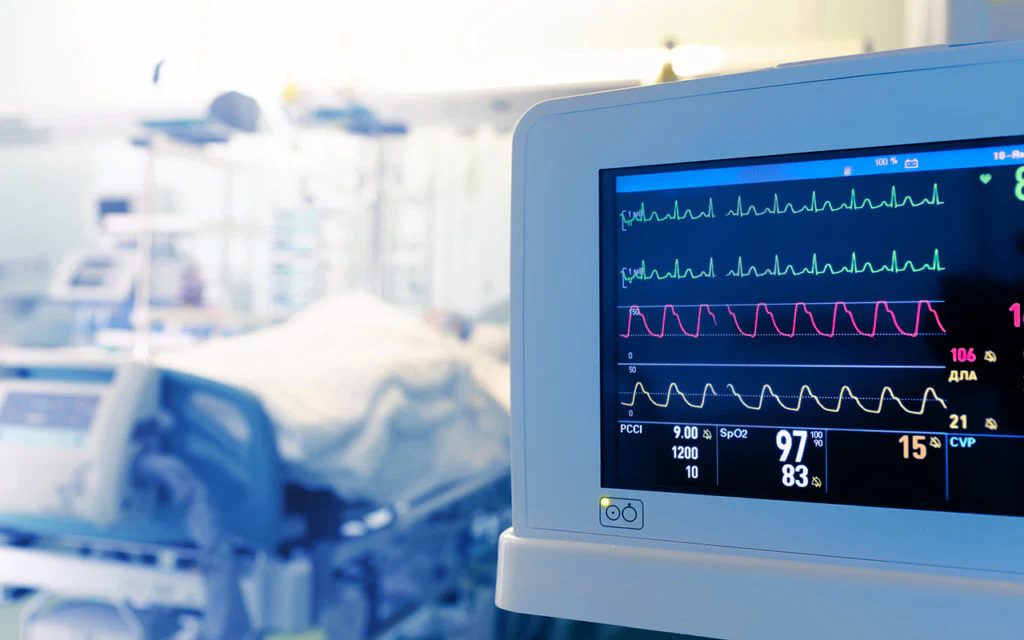
An intensive care unit looks unfamiliar because the equipment is in the open. A monitor shows heart rate, oxygen, and blood pressure. There may be oxygen tubing, a mask, or a tube connected to a breathing machine. Drips run through pumps so fluids and medicines arrive at a set rate. Alarms sound when a number leaves a set range. An alarm is a prompt for the nurse to look. It is not, by itself, proof that something has suddenly gone wrong.
Nursing is closer than on a ward because the changes being watched can happen in minutes. Visiting is usually limited, so that care, infection control, and rest are possible. Ask the unit what the current visiting rule is. Do not assume a rule you heard at another hospital.
The doctor’s round covers the reason for admission, which organs need support, what improved overnight, and what the family should expect in the next day. Write your questions down. The useful ones are specific: is breathing better, is the blood pressure holding without extra medicine, is urine returning, what is the working diagnosis. A promise of “how many days” is often not honest on day one. The course depends on the cause and on how the organs respond.
ICU, the ward, and the evening clinic
A general ward suits people who are stable enough that a nurse can review them on rounds, who can call for help, and who do not need continuous organ support. Intensive care suits people for whom that gap would be unsafe. Moving out of intensive care is a sign the support can be reduced. It is a step forward, even if the person is still tired and still in hospital.
Dr. Mandale’s two Nashik locations do different jobs. Medinova Super Speciality Hospital is the place for emergency and 24×7 critical care. THS Plus Clinics, 4, Nexus Point, Bhonsala Circle, College Road, Nashik 422005, is where consultations run from 7 pm to 9 pm every day. If you are unsure which one a sick relative needs, call and describe breathing, alertness, and urine. Do not drive to the evening clinic with someone who is gasping or unresponsive.
How this care is organised is set out on the critical care and ICU page. For a current illness or a planned consultation, use the contact page or call or WhatsApp +91 74476 86444.
What to carry, and what to ask
Bring a list of medicines, allergies, and long-term illnesses. Old discharge papers help if they are already in the bag. Tell the team about pregnancy, blood thinners, and diabetes. Name one family member who will receive updates, so the same questions are not asked of five people and the answers do not drift.
Ask who the responsible consultant is, what support is in place tonight, and what change should make you call the nurse immediately. Ask before offering food or water. A person who may need a procedure, or who is too drowsy to swallow, can be harmed by a well-meant drink.
Questions people ask
Is ICU the same as a ventilator ward?
No. The ICU full form is Intensive Care Unit. A ventilator is one machine used inside it, for people whose lungs need that help. Others in the same unit may need oxygen, blood-pressure support, or close watching without a ventilator.
Does every serious fever go to intensive care?
No. Many fevers are treated at home or with a clinic visit and tests. Intensive care is for people whose breathing, blood pressure, alertness, or kidneys are failing, or who are at immediate risk of that.
Can the family stay the whole day?
Usually visiting is limited. The unit will tell you the hours. Staying in the room all day is not what makes the treatment work. Being available on the phone, and having one person who can decide, does help.
How long does someone stay?
It varies with the cause. Some people need a short period of close watching. Others need days of organ support. Nobody can give a reliable number from a web page on the day of admission.
Related doctor
Doctor mentioned in this article — open a profile to learn more or book a visit.
- DR
Dr. Sumeet Mandale
Senior Consultant – Internal Medicine & Critical Care
Related treatments
Clinical programmes and treatments connected to this topic.

Dengue fever platelet count: what families in Nashik should know
A dengue fever platelet count is one lab number, not a diagnosis. Dr. Sumeet Mandale in Nashik explains what families should watch and when to seek care.
Read more
Multiple organ failure symptoms families notice in Nashik
Multiple organ failure symptoms families notice first, common causes, and when to seek 24×7 critical care with Dr. Sumeet Mandale in Nashik.
Read more
Viral fever symptoms in Nashik: home care and warning signs
Viral fever symptoms, safe home care, and the warning signs that mean you should see Dr. Sumeet Mandale or Medinova’s 24×7 critical care in Nashik.
Read more